Emerging Leaders Conference 2026 — Saturday, 17 October 2026, The Ark Event Centre, Port Harcourt.
Register Your Interest
Home / Programmes / Girls Code Club
Proposed school-based pilot · STEM and digital inclusion
Girls Code Club: Bridging the Gender Digital Divide
A proposed after-school digital-skills programme equipping teenage girls in public and underserved secondary schools with digital literacy, algorithmic thinking, online safety and supervised safeguarding mentorship.
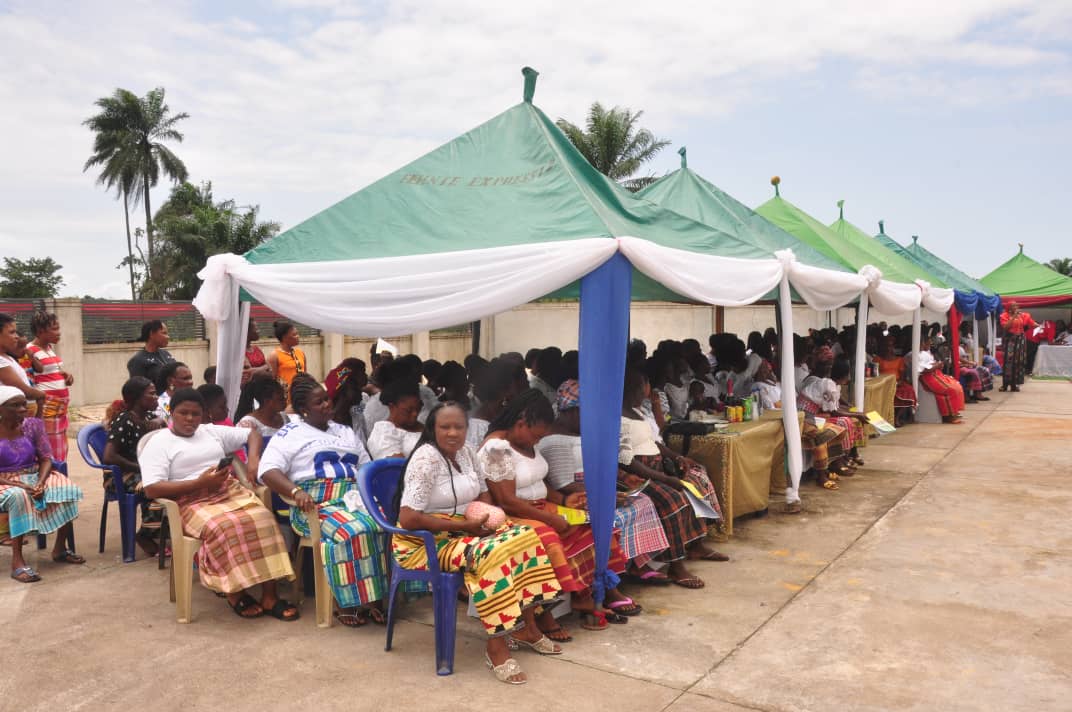
Cohort format
12-week after-school club
Guided lab sessions
Cohort target
Girls in SS1 and SS2
Public and underserved secondary schools
Host institutions
Selected public schools
Port Harcourt pilot
Status
Proposed pilot
School approvals and safeguarding pending
The Problem Being Addressed
Girls are being filtered out of technology before they ever choose it.
In public and underserved secondary schools, access to a working computer lab, a female instructor and a safe place to fail is unevenly distributed — and the loss compounds. The Club is designed to demystify computing, nurture creative problem-solving and build resilience early enough to change what a young learner believes she can do.
Target Participants
Teenage girls in public and underserved secondary schools
Learners in selected Port Harcourt pilot schools
Participants with approved parental or guardian consent
Schools able to provide a supervised space and teacher liaison
Location and duration
Proposed 12-week after-school pilot in selected Port Harcourt schools, concluding with participant projects and a parent-school showcase.
Programme Architecture
Proposed Core Pillars
Designed specifically to demystify computing, nurture creative problem-solving and instil safety and resilience for young female learners.
Pillar 01
Digital Literacy and Algorithmic Basics
Deconstructing computational logic through block programming, pseudo-coding, flowchart design and computer-hardware essentials. Outcome: independent computational logic.
Pillar 02
Web Fundamentals and Problem Solving
Hands-on HTML5 and CSS3 studio: community websites, community advocacy pages and digital portfolios addressing local challenges. Outcome: deployable web pages.
Pillar 03
Online Safety and Digital Safeguarding
Comprehensive cyber-hygiene, anti-harassment navigation, private-data encryption, ethical AI usage and reporting mechanisms for young scholars. Outcome: safe and resilient digital citizenship.
Pillar 04
Female Tech Mentorship and Careers
Weekly interactive roundtables with practising Rivers State female software engineers, network specialists and university STEM academics. Outcome: tangible STEM career pathways.
Delivery Sequence
Proposed Pilot Curriculum Modules
Delivered over twelve weeks per school term, coordinated with each school’s approved timetable.
Weeks 01 – 04 · Level 100
Foundations of Computing and Logic
Establishing the mental model before the syntax.
Computer architecture and operating systems
Algorithmic thinking using visual block-based problem solving
Introduction to secure browsing and safe search
Weeks 05 – 08 · Level 200
Logic, Web Tools and Civic Design
Turning logic into something a community can use.
HTML5 structural semantics and content architecture
Styling layouts with CSS3: flexbox, colours and responsive design
UI/UX ideation: human-centred design for school needs
Weeks 09 – 12 · Level 300
Capstone Showcase and Exhibition
Public demonstration to parents, school leadership and community stakeholders.
Collaborative team projects solving community challenges
Mentorship mock interviews and digital portfolio readiness
Parent, school principal and community demonstration day
Expected Outcomes
What participants should be able to do afterwards
Participants can build and explain a simple, working web page
Participants can describe and apply core online-safety practices
Each participant completes a capstone project shown at a parent-school showcase
Participants have met and can contact at least one female STEM mentor
Relevant SDGs
SDG 4 — Quality Education · SDG 5 — Gender Equality · SDG 9 — Industry, Innovation and Infrastructure
Status
Proposed school-based pilot. Before implementation, FDI must confirm school approvals, safeguarding arrangements, parent consent, facilitators, equipment and the final curriculum.
Take Action
Get Involved With This Programme
Whether you are a prospective participant or an institution able to support delivery, there is a defined route below.
For secondary schools
Nominate a Public School
Apply to host a study-validated 12-week club. Submit the school’s official name, LGA, contact person and computer-lab status.
What you will be asked
Your full name and preferred contact details
Your location or local government area in Rivers State
Your background and why this programme fits you
Any accessibility needs we should plan for
Opens the official FDI form in a new tab.
For mentors and CSR sponsors
Partner as a Mentor or Sponsor
Send technical expertise or underwrite a cohort’s equipment. Volunteer female tech mentors commit roughly two hours per week.
What you will be asked
Organisation name, sector and contact lead
The kind of support you are able to provide
The shared outcome you want to achieve
Your preferred next step and timeline
Submitting an enquiry does not create a partnership. The secretariat will respond to agree scope, roles and reporting.
Clarifications
Key Operational Details
Answers to the questions most often raised by participants, schools and prospective partners.
What if our public school lacks functional computers or electricity?
Nominate the school regardless. Hardware and power constraints are assessed during the school-needs stage, and equipment or solar provision may be arranged with CSR partners before a cohort begins.
Are there any costs or application fees for participating students?
No. The pilot is intended to be fully free and merit-subsidised for participating students. [CONFIRM FUNDING ARRANGEMENT BEFORE PUBLICATION.]
How does the schedule integrate with official school hours?
Sessions run strictly after school hours, on days agreed with the school principal, and always within approved, supervised school grounds.
How are students vetted and selected for each cohort?
Selection is coordinated with the school through an approved, transparent process. Every participant requires documented parental or guardian consent before joining.
Support This Programme
Put a girl in front of a keyboard, with a mentor beside her.
Support the pilot with equipment, facilitation, mentorship or a host school in Port Harcourt.
Fasttrack Development Initiative (FDI)
A Port Harcourt-based nonprofit organisation developing responsible leaders, expanding opportunity and supporting community-driven progress through education, enterprise, inclusion and civic engagement.
No. 314 NTA Road, Mgbuoba, Port Harcourt, Rivers State, Nigeria.
info@fasttrackdi.org emergingleaders@fasttrackdi.org +234 803 668 7321 +234 806 484 2664Follow FDI on Facebook
Programmes
Emerging Leaders Conference Emerging Leaders Academy Future Leaders Fellowship Youth Enterprise Lab Girls Code Club Safe Spaces Dialogues Community Digital Access DrivePolicies & Accountability
Policies and Accountability Complaints and Feedback Leadership and Governance Partners and SupportersNewsletter
Receive FDI programme updates, opportunities, event news and impact stories.
Join Our Mailing ListCopyright © 2026 Fasttrack Development Initiative (FDI). All rights reserved. · Registered Non-Governmental Organisation · Port Harcourt, Rivers State, Nigeria · fasttrackdi.org